Church records can be used for more than verifying the details for births, marriages and deaths. They can alert you to the religious customs of the times. The age at which a ceremony was performed may vary, the type of ceremony and whether it was done as an individual or a class could change. For instance in the Archdiocese of Chicago during the early 1900s the Sacrament of Confirmation was received as part of a class with one sponsor for all of the girls and one sponsor for all of the boys. Records kept would depend on the specific religion.
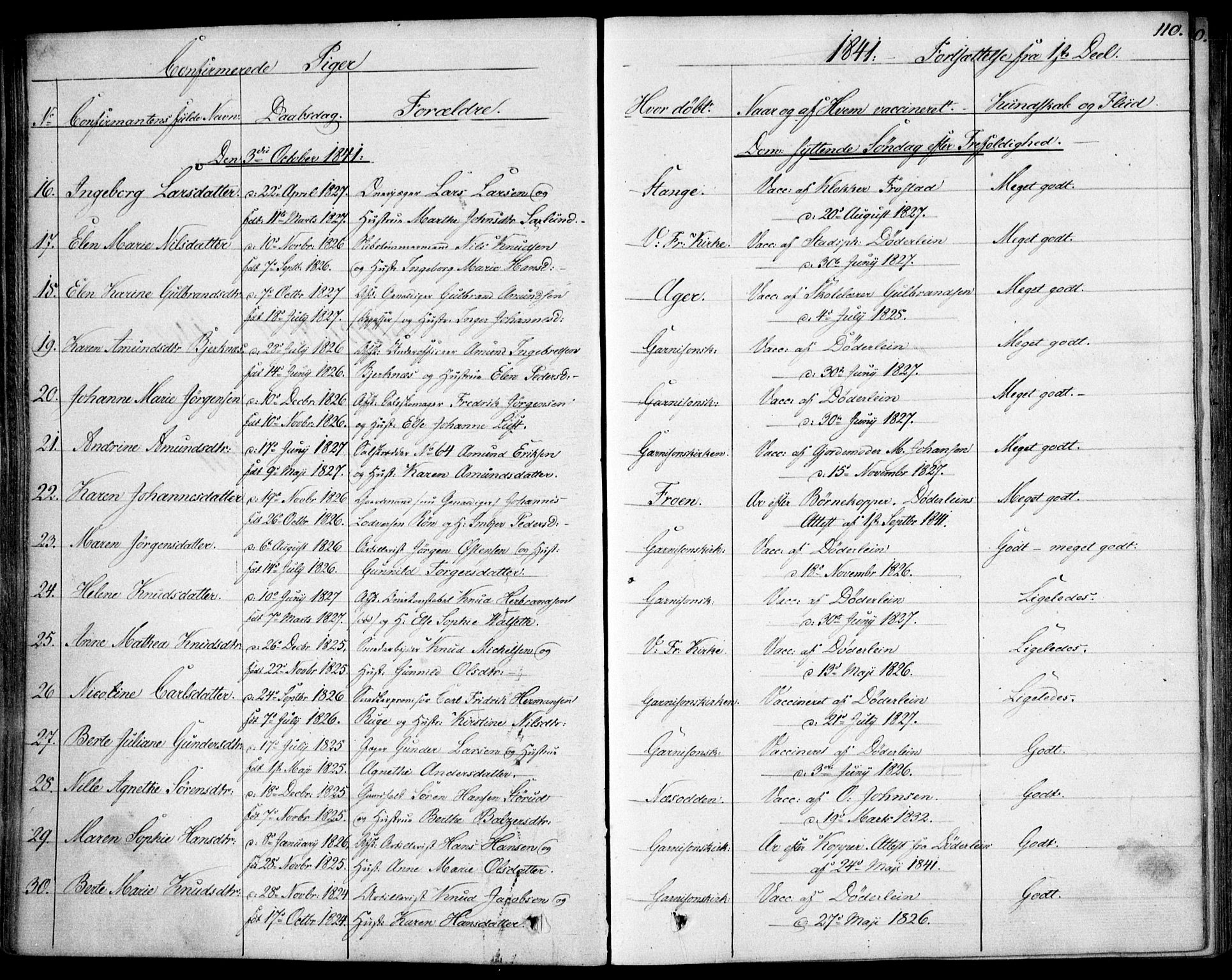
While searching for an individual in the Norwegian records and trying to determine which of several Martin Hansens born at about the same time was the correct Martin Hansen someone (I wish I remembered who so I could give them credit!) suggested that I check the confirmation records to see which of the candidates had survived childhood. Confirmation was required of all Norwegians between the ages of 14 and 18. Checking the Confirmation records did reveal the correct Martin Hansen along with his parents. Working back from there I was able to find the Christening record and also the records of his siblings. This method could be used with other religions that have other requirements for older children (communions usually at age 7 or 8, and confirmations usually at 13 to 15)
Swedish church records include a "Husförhör" which is a household examination listing everyone, including children, in a residence. Included in this listing are names, birth dates, relationships and details about when people left a residence and where they went. This can be extremely useful in tracking immigration.
On occasion, those same helpful church records can prompt more questions than the solve. My dad's parents (he a Luthuran and she a Catholic) were married in a Nuptial Mass at a Catholic church in Milwaukee at a time when "mixed" marriages were not allowed to have a Mass. A year later they were godparents to her nephew at a time when both godparents were required to be Catholic. He was buried in a Catholic cemetery when again the Catholic Church rules did not allow such a burial. I've given up trying to find an explaination and just accept the facts. No he never did convert.
Sunday, August 4, 2013
Saturday, July 13, 2013
Dad's Birthday May 14, 1910
Randy is doing more Saturday Night Genealogy Fun!
Your mission this week, should you decide to accept it, is to:
1) What day of the week was your Father born? Tell us how you found out. I googled for a 1910 calendar.
My father, Donald George Hansen, was born on Saturday, May 14, 1910.
2) What has happened in recorded history on your Father's birth date (day and month)? Tell us how you found out, and list five events. This Day in History is the place I found these events
lEAD STORY
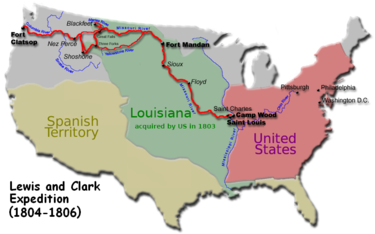
Lewis and Clark depart,1804
AMERICAN REVOLUTION
Constitutional Convention delegates begin to assemble, 1787
AUTOMOTIVE
DaimlerChrysler sells most of Chrysler for $7.4 billion, 2007
CIVIL WAR
The Battle of Resaca, Georgia, begins, 1864
COLD WAR
The Warsaw Pact is formed, 1955
CRIME
A brutal murder begins an unusual investigation,1948
DISASTER
Two trains crash in Japan, 1991
GENERAL INTEREST
Jenner tests smallpox vaccine, 1796 First American Olympiad,1904 State of Israel proclaimed, 1948 3) What famous people have been born on your Father's birth date? Tell us how you found out, and list five of them. I found this information at biography.com
Thomas Gainsborough 1727 - 1788
Bobby Darrin 1936 - 1973
George Lucas 1944
Mark Zuckerberg 1984
Tony Perez 1942 (baseball player)
4) Put your responses in your own blog post, in a comment on this blog post, or in a status or comment on Facebook.
Your mission this week, should you decide to accept it, is to:
1) What day of the week was your Father born? Tell us how you found out. I googled for a 1910 calendar.
My father, Donald George Hansen, was born on Saturday, May 14, 1910.
2) What has happened in recorded history on your Father's birth date (day and month)? Tell us how you found out, and list five events. This Day in History is the place I found these events
Thomas Gainsborough 1727 - 1788
Bobby Darrin 1936 - 1973
George Lucas 1944
Mark Zuckerberg 1984
Tony Perez 1942 (baseball player)
4) Put your responses in your own blog post, in a comment on this blog post, or in a status or comment on Facebook.
Friday, June 28, 2013
Family Friday - Four Generations of Brides Celebrating June 28 Anniversaries!
June has been referred to as the "wedding month" although I think that is changing as our society becomes more mobile and cosmopolitan. However June is the month picked by many of the brides in my family especially the 28th of June. It began 28 June 1893 in Port Huron, Michigan with the wedding of my grand parents Michael Connery and Alice Fleming in the home of Alice's sister Mary Walsh. The ceremony was performed by Fr Michael Fleming, brother of the bride.
The next generation to marry on that date were the daughters of Michael and Alice. Pauline married William F Ryan on 28 June 1928 at St Mel Church. Elizabeth married Donald G Hansen, also at St Mel Church, on 28 June 1941. (Elizabeth wore her mother's dress)
Two of Pauline's children also choose the date for their own weddings. Alice married George Sterling in 1951 at St Catherine of Siena Church and her brother William F Ryan II married his bride Barbara Brown in that same church in 1956.
Elizabeth Hansen's granddaughter Nicole also chose this date to marry John Schoenholtz in 2012. They were married in CA.
![]() |
| Michael and Alice |
The next generation to marry on that date were the daughters of Michael and Alice. Pauline married William F Ryan on 28 June 1928 at St Mel Church. Elizabeth married Donald G Hansen, also at St Mel Church, on 28 June 1941. (Elizabeth wore her mother's dress)
![]() |
| Pauline and Bill Ryan |
![]() |
| Elizabeth and Donald |
![]() |
| Alice and George Sterling |
![]() |
| Barbara and Bill Ryan |
Elizabeth Hansen's granddaughter Nicole also chose this date to marry John Schoenholtz in 2012. They were married in CA.
A toast to all celebrating an anniversary today!
Monday, June 24, 2013
Military Monday - Two Cousins in the Civil War
| Parson's battery position photo Wikipedia |
On 12 April 1861, the day of the first battle of the Civil War, brothers William Fergason and Jeremiah Ferguson were farmers in the small community of Willow Hill in Jasper County in southern Illinois. The crops typical of the area included buckwheat, Indian corn, oats, wheat, potatoes, and apples. There were also a few cows, pigs, and chickens in addition to horses used for plowing and transportation. Soon their concerns about the price of seed or too much or too little rain would turn to worries about the was as each man watched his oldest son go off to war.
Jeremiah was the first to wave good-bye to his son George W as he enlisted on 14 Aug 1862 in Granville, IL. He was twenty years old and 5 ft 9 3/4 in tall. He was assigned as a private to Company E of the 123 Il US Infantry and mustered into the unit on 6 Sep 1862. His unit was sent to Louisville, Ky then on to join the the 3 brigade of the 10th division of the Army of Ohio under the command of General Buell. After chasing General Bragg's army into Kentucky they became involved in the Battle of Perryville. This battle became known as the bloodiest battle of the Civil War with casualties in excess of 7,677 from both sides.
On the Union side 894 soldiers died. George W Ferguson was killed in action on 8 Oct 1862 at Perryville, KY. It had been less than two months since he had enlisted.
| The battle of Perryville photo Wikipedia |
Cousins George and William Ferguson shared many things but both did not return from war. They shared grandparents, occupations, aunts, uncles, and cousins. They even both had grey eyes.
Sunday, June 16, 2013
Church Record Sunday - Finding Treasure in Norwegian Church Records
I never thought I would be glad about the three years of Latin I took in high school. Remember the old saying "Latin is a dead language, dead as it can be. First it killed the Romans, now it's killing me."? My friends and I chanted that almost as often as we chanted "Veni, Vidi, Vici". That was before I became interested in genealogy. Most European church records are written in a mixture of the language of the country (Swedish, French, German, etc) and Latin. Knowing some Latin makes it much easier to interpret church records. Church records are an extremely important resource in tracing your family tree.
Norwegian church records, for example, have a very subtle way of recording legitimacy. Unlike other countries there is no column to indicate legitimate/illegitimate. Rather the names of the parents are recorded in reverse order. In other words, usually the father's name and place of birth would be recorded first followed by the name and place of birth of the mother. Illegitimacy is indicated by the juxtaposition of the father and mother's information. The christening records show the parents place of birth of the parents. This can help take you back another generation and reveal collateral relatives. A tip I received from a Norwegian researcher was to check the confirmation records to see if someone had survived childhood. This helps to make sure you are not trying to find someone who had died in childhood and can thus narrow your line of research. Norwegians were required by law to be confirmed before they could marry.
![]() |
| Garnisonsmenigheten parish in Oslo, Norway where my great-grandfather and grandfather were Christened. (photo Google images) |
Saturday, June 15, 2013
Saturday Night Genealogy Fun - Three Things About Your Father
It's time for Randy Seaver's Saturday Night Genealogy Fun!
Your mission this week, should you decide to accept it, is to:1) Sunday, 16 June, is Father's Day. Let's celebrate by writing a blog post about our Father, or another significant male ancestor (e.g., a grandfather).
2) What are three things about your father (or significant male ancestor) that you vividly remember about him?
3) Tell us all about it in your own blog post, in a comment to this post, or in a Facebook Status or Google+ Stream post.
4. I am adding a fourth quality because my dad wouldn't be complete without adding his shear delight and love of children. All children! But especially his own. Nothing made him prouder than showing off his family. On Sunday morning you could see him absolutely beam with pride as the whole family walked down the street and marched into a whole pew for Mass. Regretably dad died while his children were 2 years to 17 years old, so we didnt really know him as well as we would have liked.
Your mission this week, should you decide to accept it, is to:1) Sunday, 16 June, is Father's Day. Let's celebrate by writing a blog post about our Father, or another significant male ancestor (e.g., a grandfather).
2) What are three things about your father (or significant male ancestor) that you vividly remember about him?
3) Tell us all about it in your own blog post, in a comment to this post, or in a Facebook Status or Google+ Stream post.
My dad, Donald George Hansen (1910 - 1959), was born May 14, 1910 in Tooele, Utah. His parents were Adolph Halfdam and Henrietta Eva (Burbach) Hansen. His sister Dorothy Eva was about 18 months old at his birth. The Hansen family has traveled to Utah from the Chicago area for work reasons. Shortly after his birth the family returned to the Chicago area where Donald spent the remainder of his life. Donald married Betty Connery on 28 June 1941.
Betty and Don had nine children ( 5 girls and 4 boys) and I am the oldest.
1. While in high school Donald enjoyed playing basketball and played on a state basketball championship team. He played for the Chicago YMCA team. The love of basketball remained with him as evidenced by the hoop and backboard in our driveway.
2. After leaving high school, Donald went to work, with his father and cousins and uncles, for his uncle Oscar Daniels' construction company. The company did iron work construction all over the country but mostly in the midwest. Later, probably about 1944-45, Donald went to work for his father-in-law's real estate firm M J Connery and Sons. The business was a combination travel, insurance and real estate agency. Donald became the resident realtor and broker. He was also a notary and had a big metal seal that he used of emboss his seal. I was very impressed with it. On Thursday nights the office was open late and Don was the one to keep it open. When he came home on Thursday nights he would bring mom the Saturday Evening Post and a pint of Butter Pecan ice cream. Other nights he would stop at his sister Dorothy's house to see his mother and nieces and nephews. At Dorothy's he would stand in the middle of the living room and make it rain by putting his hands in his pants pockets and pulling out his change which he would then fling into the air so he could watch all the kids scramble for the money.
3. Donald had a great sense of humor and loved playing jokes. Once when mom and dad were having company, dad took a mounted, stuffed angora goat that he had picked up somewhere, and placed so that it was peering in the dining room window and asked the guests to look out the window. He also owned a beer stein that had a frog molded in the bottom of it. Unsuspecting guests would take a drink only to see a frog sitting in the bottom of their mug.
4. I am adding a fourth quality because my dad wouldn't be complete without adding his shear delight and love of children. All children! But especially his own. Nothing made him prouder than showing off his family. On Sunday morning you could see him absolutely beam with pride as the whole family walked down the street and marched into a whole pew for Mass. Regretably dad died while his children were 2 years to 17 years old, so we didnt really know him as well as we would have liked.
Saturday, May 11, 2013
The Genealogy Highlight of my Week - Saturday Night Genealogy Fun
![]() |
| photo credit: cafepress.com |
It's Saturday and Randy Seaver has issued his "Saturday Night Genealogy Fun" challenge for this week. The challenge this week is:
1) What genealogy fun have you had this week? What is your genealogy highlight of the week? It could be attending the NGS conference, it could be finding a new ancestor, or it could be reading a new genealogy book, or anything else that you have enjoyed.
2) Tell us about it in a blog post on your own blog, in a comment to this post, or in a Google Plus or Facebook post.
This week our genealogy group has a guest speaker for our regular meeting. Lisa/SmallestLeaf came to our meeting and presented a program on "Telling the tales of your family tree: how to share your research in story form." Aside from attending a great presentation, it was very gratifying to see that the extra publicity work was successful in more than doubling our normal meeting attendance. We also had several new people attend the meeting and hope they keep coming. It is exciting to see the Schertz Cibolo Valley Area Genealogists grow and become more visible in the community.
Subscribe to:
Posts (Atom)